
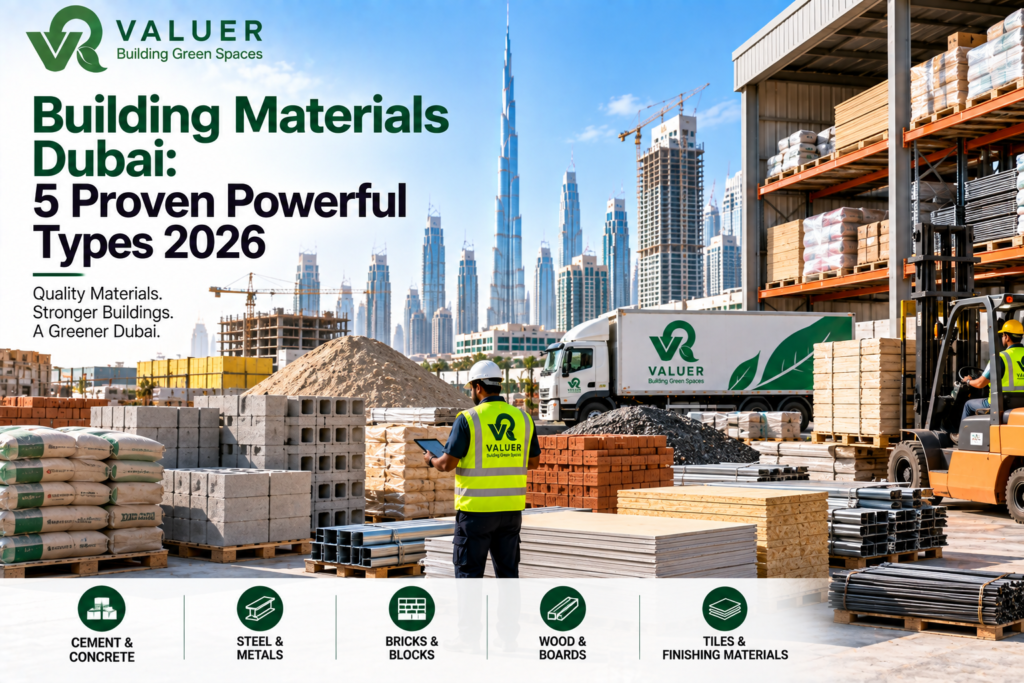
Building materials Dubai contractors, developers, and property owners specify across the emirate’s fast-growing construction and renovation market have never been subject to more rigorous performance, compliance, and sustainability requirements than in 2026. Dubai’s construction sector is generating record activity — with major residential community completions across Dubai South, DAMAC Lagoons, and Emaar’s The Valley, large-scale infrastructure works supporting Expo City development, and a sustained pipeline of commercial and hospitality projects across Business Bay, DIFC, and Dubai Marina all simultaneously driving demand for quality building materials Dubai’s most demanding construction programmes require.
The building materials specification environment in 2026 is shaped by three forces — Dubai Municipality’s tightening green building compliance framework under Al Sa’fat, international ESG reporting requirements that construction contractors and developers face from institutional investors and government procurement bodies, and the increasingly sophisticated specification awareness of Dubai property buyers and tenants who recognise quality building materials properties use as a direct indicator of long-term asset performance and operating cost.
At Valuer UAE, we supply several of the most critical categories of building materials projects across residential, commercial, and industrial sectors need — including aluminium systems, WPC composite products, waste management infrastructure, and logistics packaging. This guide covers the five most important building materials contractors and developers need to have right in 2026.
Why Building Materials Dubai Specification Decisions Have Never Been More Consequential
The building materials specification environment in 2026 differs fundamentally from the specification context of even five years ago — with regulatory requirements, sustainability expectations, and total cost of ownership analysis all converging to make material selection one of the most financially and operationally consequential decisions across any Dubai construction or renovation project.
Al Sa’fat green building regulations now effectively mandate specific building materials specifications across glazing, insulation, and cladding categories for most new construction and significant renovation project categories — making compliance a prerequisite for building permit approval rather than a voluntary differentiator for sustainability-conscious developers. The UAE’s sustainable building materials market is growing at 15.62% CAGR through 2032 — reflecting both regulatory momentum and the growing commercial recognition that correctly specified building materials properties use deliver measurably better lifecycle cost performance than conventional alternatives across 20 to 30 year ownership horizons.
Type 1 — Aluminium Systems Are the Most Critical Structural Building Materials Dubai Uses
Thermally broken aluminium window, door, and facade systems are among the most structurally and energetically significant building materials Dubai residential and commercial projects specify — with the UAE’s construction market driven by significant demand for high-performance aluminium across every building category from luxury villas through to commercial towers and hospitality developments.
The combination of structural performance, design flexibility, corrosion resistance, and energy efficiency that aluminium building materials Dubai projects specify provides is unmatched by any alternative facade and envelope material available in the UAE market. Thermally broken aluminium frames with double glazed Low-E units reduce cooling energy consumption by 20 to 30% compared to standard single-pane systems — making aluminium glazing building materials most impactful single specification decision for energy performance compliance under Al Sa’fat regulations. Aluminium’s 100% recyclability at end of life provides the sustainability credential that UAE Net Zero 2050 aligned building programmes require from their primary structural building materials projects use.
The breadth of aluminium’s application as building materials construction and fit-out programmes need covers windows, doors, gates, shopfronts, curtain wall facades, cladding panels, balcony railings, and decorative architectural elements — making it the single most versatile building material category across Dubai’s commercial and residential construction landscape.
Type 2 — WPC Composite Is the Fastest-Growing Outdoor Building Materials Dubai Specifies
Wood-plastic composite products have emerged as among the most rapidly growing building materials residential, commercial, and hospitality outdoor space projects specify — with WPC decking, wall cladding, and outdoor flooring replacing conventional timber across pool surrounds, garden terraces, hotel outdoor lounges, and restaurant terraces across the emirate at a pace that reflects WPC’s decisive performance advantages in Dubai’s extreme outdoor climate.
The building materials outdoor specification case for WPC is straightforward — conventional timber building materials properties have historically used for decking and outdoor cladding deteriorate rapidly under the combination of extreme UV radiation, temperature cycling, and coastal humidity that Dubai’s outdoor environment generates. WPC composite building materials properties now increasingly specify maintain their structural integrity and aesthetic appearance for 25 to 30 years in the same conditions that cause timber alternatives to fail within 5 to 10 years — eliminating the annual maintenance programme of staining, sealing, and structural inspection that timber outdoor building materials properties require.
The sustainability dimension of WPC as building materials green certification programmes need is equally compelling — with recycled plastic and responsibly sourced wood fibre composition providing the recycled content credential that Al Sa’fat and Estidama green building rating frameworks reward in their material specification assessment criteria.
Type 3 — Galvanized Steel Is the Most Durable Industrial Building Materials Dubai Uses
Hot-dip galvanized steel products — including waste containers, structural fabrication, gates, fencing, and outdoor structures — represent the most durability-critical category of building materials industrial, municipal, and large-scale residential projects specify for applications where structural permanence, load-bearing performance, and weather resistance across decades of demanding outdoor use are the non-negotiable specification drivers.
The galvanizing process — immersing fabricated steel in molten zinc at approximately 450 degrees Celsius to ISO 1461 standard — creates the most durable corrosion protection available for structural steel building materials coastal and high-humidity environments demand. Powder-coated galvanized steel building materials gate, fencing, and structural fabrication applications use combine the long-term corrosion resistance of the galvanized substrate with the aesthetic flexibility of powder coating — available in any RAL colour to complement any architectural palette.
Valuer UAE’s galvanized metallic bins and metallic skips are among the most widely deployed galvanized steel building materials Dubai residential and commercial properties use for waste management infrastructure — with hot-dip galvanized construction providing the 8 to 10 year operational lifespan that correctly specified and maintained galvanized waste containers achieve in Dubai’s coastal operating environment.
Type 4 — Sustainable and Recycled Building Materials Dubai Projects Increasingly Require
The fourth critical category of building materials Dubai 2026 construction and renovation programmes are increasingly specifying is sustainable and recycled content materials — driven by the regulatory direction of UAE green building frameworks, the ESG reporting requirements of institutional developers and government procurement bodies, and the growing market premium that sustainability-documented properties command from sophisticated buyers and international tenant organisations.
Recycled steel cuts energy use by 75% compared to virgin production — making steel products with documented recycled content one of the most impactful sustainable building materials projects can specify for structural and fabrication applications. WPC composite building materials Dubai outdoor projects use contribute recycled plastic diversion from landfill and eliminate the chemical treatment cycle that conventional timber maintenance demands across its operational life. European-sourced timber building materials packaging and formwork applications use from FSC-certified sustainable forestry provide the responsible sourcing documentation that international construction standards and green building certification programmes require. Valuer UAE’s white wood and logistics product range includes FSC-certifiable European softwood sourced from documented sustainable supply chains — providing the material traceability that sustainability-conscious Dubai construction programmes need.
Type 5 — Packaging and Logistics Building Materials Dubai Construction Programmes Need
The fifth and most frequently overlooked category of building materials construction and renovation programmes need to specify correctly is packaging and logistics materials — including the pallets, wooden crates, and carton boxes that transport and protect the primary building materials Dubai projects use from manufacturer to site, and the reusable crate systems that manage materials flow within active construction logistics operations.
Incorrectly specified packaging building materials construction import programmes use creates damage, contamination, and export compliance failures that delay material delivery and increase total project cost — with ISPM-15 non-compliant wooden pallets creating border hold incidents that delay material shipments through Jebel Ali Port, and inadequately specified carton packaging creating product damage during transit that requires replacement procurement that extends project timelines.
Valuer UAE’s full logistics range — covering wooden pallets in ISPM-15 certified and domestic grades, plastic pallets, crate boxes, and carton boxes — provides Dubai construction programmes with correctly specified packaging building materials import and distribution operations need for reliable, compliant material supply chain performance. According to Dubai Municipality, all construction and renovation projects must use building materials complying with applicable UAE standards and green building performance requirements — Valuer UAE’s product range is manufactured and sourced to meet every applicable UAE and international standard.
FAQs — Building Materials Dubai
What are the most important building materials Dubai projects need to specify correctly in 2026?
The five most critical categories are thermally broken aluminium glazing systems for energy performance compliance, WPC composite products for durable low-maintenance outdoor applications, hot-dip galvanized steel for structural permanence in corrosive outdoor environments, sustainable and recycled content materials for green building certification, and correctly specified packaging and logistics materials for reliable material supply chain performance.
Are sustainable building materials Dubai projects use required by regulation?
Al Sa’fat green building regulations effectively mandate high-performance glazing, insulation, and envelope specifications for most new construction projects in Dubai — with sustainable material choices increasingly embedded in the building permit approval process and green building certification frameworks that institutional developers and government procurement bodies require.
What WPC building materials Dubai outdoor projects should specify?
WPC decking for pool surrounds and terraces, WPC wall cladding for feature walls and boundary finishes, and WPC outdoor flooring for covered and semi-exposed areas are the primary WPC building materials Dubai residential, commercial, and hospitality outdoor space projects should specify — with UV-stabilised, co-extruded premium grades recommended for fully exposed outdoor applications in Dubai’s extreme climate.
Do packaging building materials Dubai construction import programmes use need ISPM-15 certification?
Yes. All wooden packaging materials — pallets, crates, and dunnage — used to import building materials Dubai construction programmes source internationally must be ISPM-15 heat-treated and IPPC-marked to prevent border hold incidents at Jebel Ali Port and Al Maktoum International Airport customs.
How do I contact Valuer UAE for building materials Dubai supply?
Contact Valuer UAE via the enquiry form, email hello@valueruae.com, or WhatsApp +971 52 653 4567 for a fast, itemised quote on any building materials Dubai supply requirement across aluminium systems, WPC products, galvanized steel, or logistics packaging.